

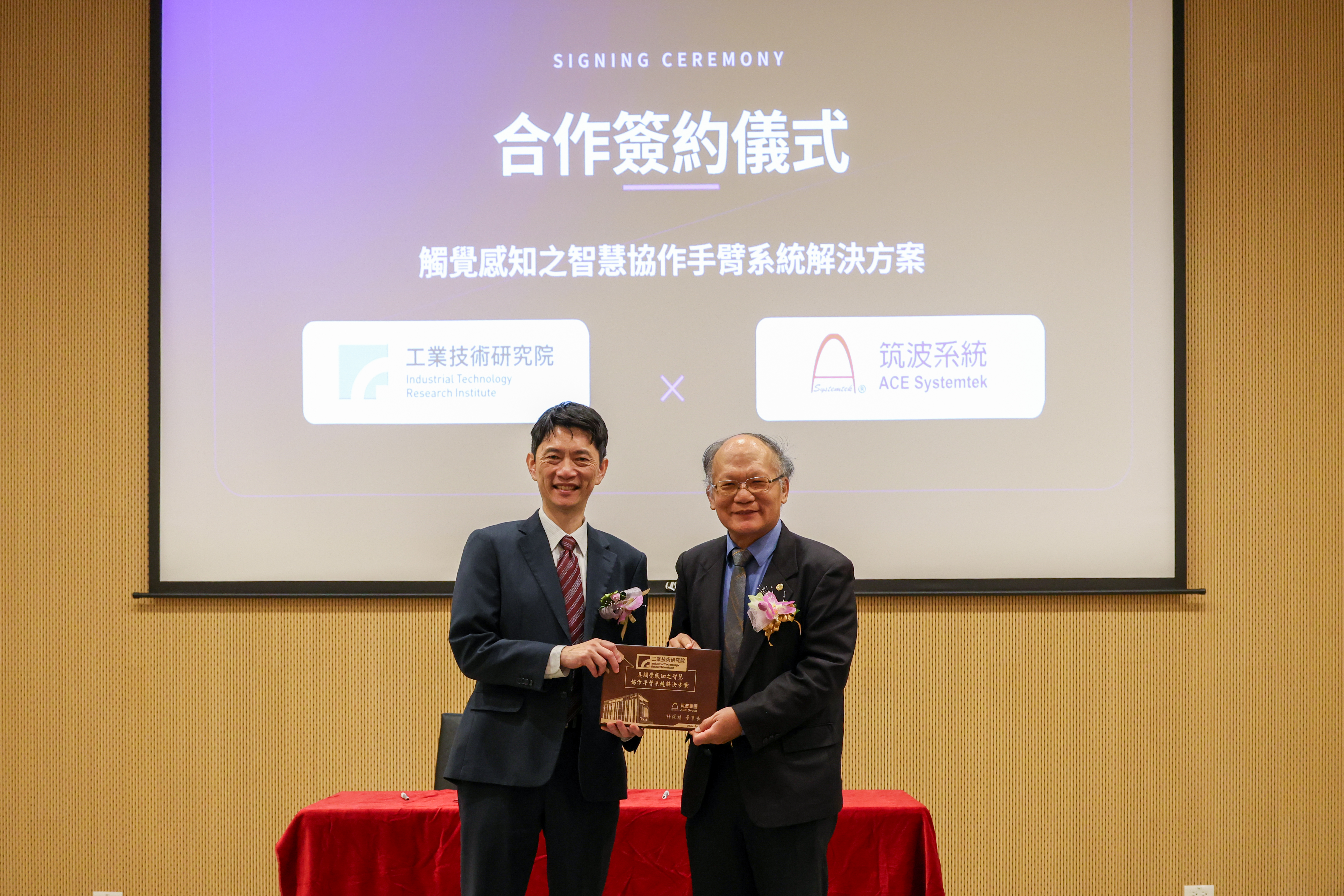
Figure: Signing Ceremony. Dr. Shih-Chieh Chang, General Director, ITRI (Left); Steve Hsu, President, ACE (Right).
[April 24, 2026 – Hsinchu, Taiwan] ACE Systemtek Co., Ltd. (ACE Systemtek) and the Industrial Technology Research Institute (ITRI) have officially signed a MOU. The two parties will collaborate on "Intelligent Collaborative Robot Systems with Tactile Sensing," integrating cutting-edge sensing technology with automation platforms to drive the industrial upgrade of smart manufacturing.
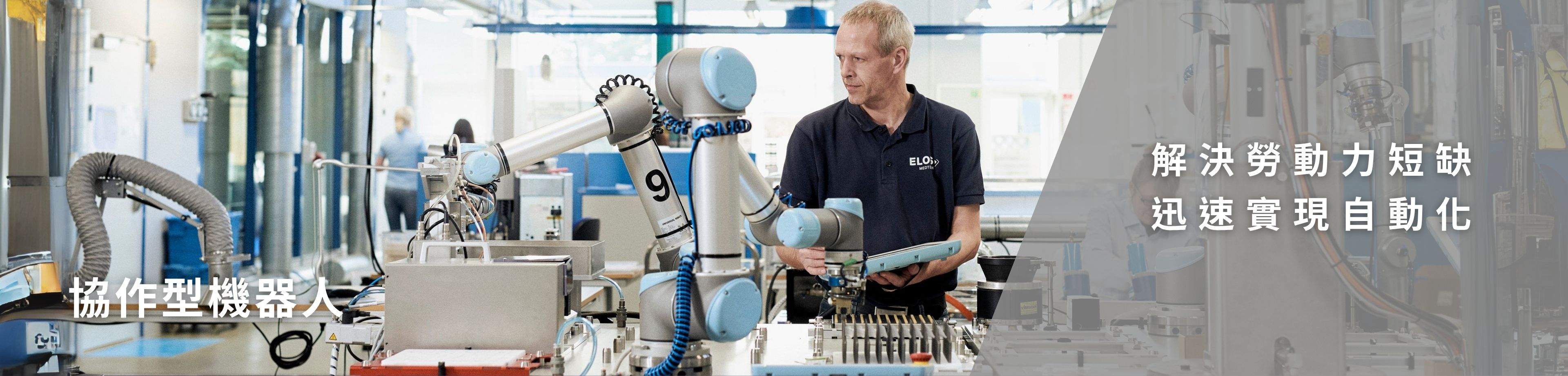
By equipping UR (Universal Robots) collaborative arms with high-sensitivity AI tactile modules, the performance of these robots in extreme environments is significantly optimized. Through tactile feedback, the collaborative arms can perceive object characteristics with the precision of human fingers, substantially enhancing operational stability. Featuring ultra-low latency real-time response and high-fidelity tactile sensing, the system meets the stringent requirements of precision industries for delicate force control.
"ACE Systemtek has been deeply involved in the fields of testing, measurement, and system integration for many years, possessing robust experience in platform integration," stated Steve Hsu, President of ACE Systemtek. "By integrating UR collaborative arms with ITRI’s technology, we can provide customers with more flexible and sophisticated intelligent solutions." Dr. Shih-Chieh Chang, General Director of ITRI’s Electronic and Optoelectronic System Research Laboratories (EOSL), noted: "ITRI is committed to bridging the gap between advanced sensing technology and industrial applications. Through this collaboration with ACE Systemtek, we aim to help enterprises overcome perception bottlenecks in complex industrial processes."
Looking ahead, ACE Systemtek and ITRI will continue to build a comprehensive technical ecosystem. Both parties are dedicated to enhancing the "sensory dimension" of automation equipment, empowering Taiwan's manufacturing industry to achieve more competitive intelligence goals during the digital transformation process.

.png)
.png)
.png)
.png)