

UR Palletizing
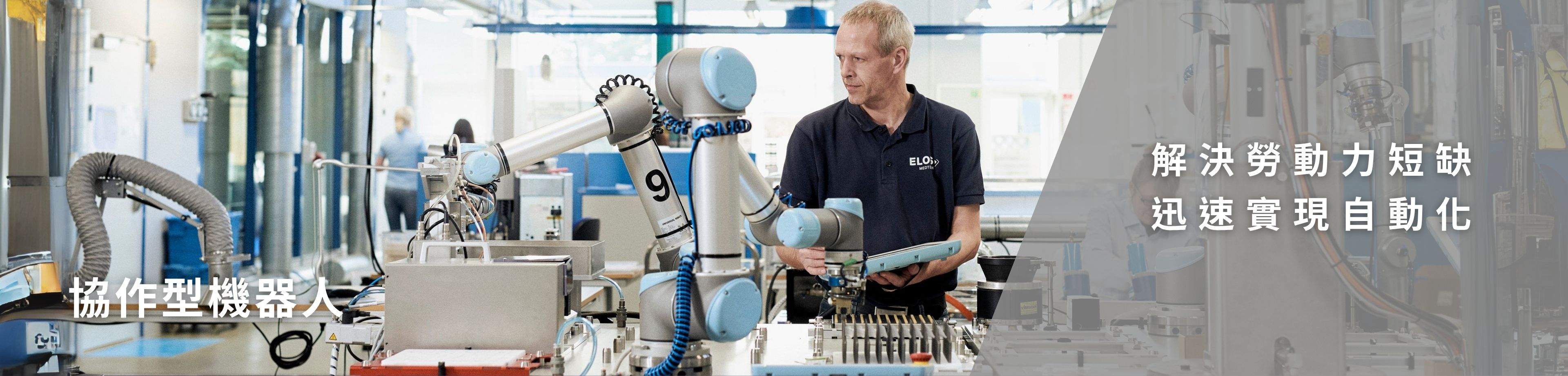
Optimize your end-of-line operations and increase productivity with collaborative robotic palletizing solutions. Perform repetitive tasks with consistency and accuracy, regardless of variations in products.
Start an efficiency revolution with palletizing robots
Palletizing is an end-of-line task performed in almost all production facilities and is crucial for optimizing storage, material accessibility, and the final link between warehouse and end customers. Yet, it can quickly become a bottleneck.
There's a ramping labor shortage in the manufacturing industry. People don't want to perform such strenuous tasks, and workers face high injury risks, which can lead to prolonged absences. Subpar pallets, damaged packaging, and unstable loads can compromise the integrity of products during storage and transit, leading to costly losses. Hiring and packaging costs are increasing daily. That's where collaborative robotic palletizing comes in.
Collaborative robots (cobots) are not only reliable but also highly adaptable; they can be reprogrammed on the go to shift seamlessly between different palletizing tasks, increasing flexibility and reducing downtime. They can work hours without breaks, which means you can significantly increase your production output and get your products to the market faster. Robotic palletizing can also be a safer option for your workers. With cobots handling the heavy lifting and stacking, there is less risk of injury or strain on your employees.
Secure loads and perfect balance
Palletizing often requires a combination of high precision and significant physical strength, which is difficult for humans, especially due to the repetitive nature of the task. This challenge intensifies when the goods to be stacked vary in size and shape. Cobots consistently perform repetitive stacking tasks with accuracy. When it comes to handling variations in products, they can also be quickly reprogrammed to meet changing requirements.
.png)
.png)
.png)
.png)